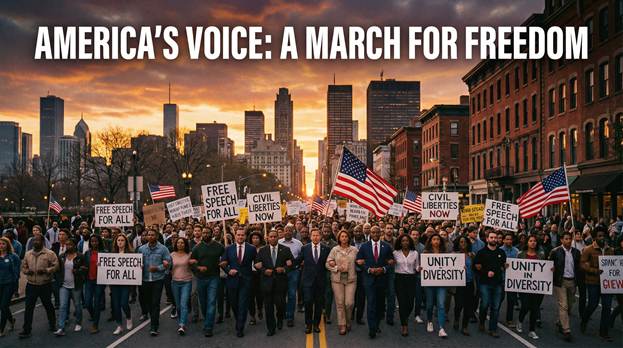
AMERICA’S VOICE: A MARCH FOR FREEDOM
Standing Up While Staying Safe: A Guide for Americans Concerned About Government Overreach
The First Amendment is not just a legal protection—it’s the cornerstone of American democracy. The right to assemble, speak freely, and petition the government for redress of grievances has defined our nation since its founding. But in 2026, exercising these rights has become more complicated, and for many Americans, more frightening.
Recent events have shaken communities across the country, forcing citizens to grapple with a difficult question: How do you make your voice heard while keeping yourself and your family safe?
The Current Reality: Understanding What’s Happening
The statistics are sobering. According to multiple news sources, at least 32 people died in Immigration and Customs Enforcement (ICE) custody in 2025—the highest number since 2004. And 2026 has already seen at least eight additional deaths connected to ICE enforcement activities.
Two names have become rallying cries for protesters nationwide: Alex Pretti and Renee Nicole Good, both U.S. citizens who were shot by federal agents in Minneapolis in January 2026.
Alex Jeffrey Pretti was a 37-year-old intensive care nurse who worked for the U.S. Department of Veterans Affairs. He was shot and killed by federal agents on the morning of January 24, 2026, in what has now prompted a Department of Justice civil rights investigation. Renee Nicole Good was a mother of three and an award-winning poet whose death has sparked protests across the country.
These incidents have prompted difficult conversations about training, use of force, and accountability. NPR has reported on questions being raised about ICE agent training and use of force protocols. A recent CNN poll found that 51% of Americans believe ICE enforcement actions are making cities less safe, while only 31% believe they’re making cities safer.
Whatever your political beliefs, these events underscore a fundamental truth: Americans are increasingly concerned about the relationship between citizens and law enforcement, and many are choosing to exercise their constitutional right to protest.
Why Peaceful Protest Matters
Throughout American history, peaceful protest has been the engine of change. From the suffragettes who won women the right to vote, to the civil rights marchers who ended Jim Crow, to the labor organizers who secured the 40-hour workweek, Americans have always gathered to demand accountability from their government.
Today, that tradition continues. Protests have erupted in response to the Minneapolis shootings, with demonstrators taking to the streets to demand accountability and transparency. Experts note that current anti-ICE protesters are following the same nonviolent playbook that communities around the world have used to fight threats to their safety.
But protest in 2026 requires more preparation than ever before. Modern surveillance technology, shifting legal interpretations, and heightened tensions all mean that demonstrators must be thoughtful about how they exercise their rights.
Essential Safety Tips for Protesters
Before You Go
1. Research the Event
Know what you’re attending. Look up the organizers, the planned route, and any permits that have been obtained. Understand the legal framework in your city—some localities have specific rules about where protests can occur and what permits are required.
2. Use the Buddy System
Never attend a protest alone. Go with trusted friends or family members, and establish a meeting point in case you get separated. Share your plans with someone who isn’t attending so they know where you are and when to expect you back.
3. Pack Wisely
Bring water, snacks, identification, emergency contact information written on paper (not just in your phone), and any necessary medications. Consider bringing cash in case you need to quickly leave the area. A portable phone charger is essential.
4. Know Your Rights
The ACLU and other organizations offer excellent resources on your rights as a protester. In general, you have the right to photograph and video record anything in plain view in public spaces. You have the right to remain silent and to refuse consent to a search. You have the right to an attorney if you are detained. Memorize key phone numbers for legal aid organizations.
Digital Security: Protecting Yourself in the Surveillance Age
Modern protests require modern precautions. Law enforcement agencies now have access to sophisticated surveillance tools, and your smartphone can be a liability if not properly secured.
1. Encrypt Your Device
Fully encrypt the data on your phone before attending any demonstration. This is built into most modern smartphones and can be enabled in your security settings.
2. Disable Biometric Access
Face recognition and fingerprint unlocking can be compelled more easily than a PIN or password. Before arriving at a protest, switch to a strong passcode only.
3. Consider Airplane Mode
Putting your phone on airplane mode prevents it from connecting to cell towers and potential surveillance equipment like Stingrays (cell site simulators).
4. Be Aware of Facial Recognition
Facial recognition technology has become one of the most powerful tools for identifying individuals at protests. Consider wearing a face mask and sunglasses—not to hide your identity, but to exercise your right to privacy.
5. Think Before You Post
Social media posts can be used to identify you and others. Be thoughtful about what you share in real-time. Avoid posting photos that clearly identify other protesters without their consent.
Physical Safety During the Protest
1. Stay Aware of Your Surroundings
Position yourself near exits and know multiple routes away from the area. Be alert to any changes in crowd energy or police positioning.
2. Watch for Vehicles
If you observe a vehicle moving through or near the crowd, move quickly away to a safe location and alert others around you.
3. Know De-escalation Techniques
Tensions can run high at protests. Understanding how to de-escalate confrontations—whether with counter-protesters, bystanders, or law enforcement—can prevent situations from becoming dangerous.
4. Dress Appropriately
Wear comfortable, closed-toe shoes you can move quickly in. Avoid loose clothing that could get caught or grabbed. In cold weather, layer up. In hot weather, protect yourself from sun exposure.
5. Have an Exit Plan
Before the protest begins, identify multiple routes out of the area. Know where the nearest hospitals, transit stations, and safe spaces are located.
Beyond the Streets: Other Ways to Make Your Voice Heard
Protests are powerful, but they’re not the only way to effect change. Consider these additional methods:
Contact Your Representatives
Phone calls, emails, and letters to elected officials still matter. Consistent constituent pressure influences policy decisions.
Support Legal Organizations
Organizations like the ACLU, the National Immigration Law Center, and local legal aid societies are working on the front lines to protect civil liberties. Financial support or volunteer time strengthens their work.
Document and Share Information
In Minneapolis, smartphone recordings by everyday citizens have been essential in documenting incidents and preserving evidence. If you witness something, you have the right to record it.
Vote and Organize
Electoral participation remains the most direct way to influence policy. Register to vote, help others register, and participate in local elections where turnout is often lowest but impact is highest.
Support Independent Journalism
A free press is essential for accountability. Support journalists and outlets that are doing the difficult work of documenting what’s happening in communities across America.
The Path Forward
America has always been a nation defined by its willingness to self-correct—to look honestly at its failures and work toward its ideals. The right to protest, to speak out, to demand better from our government is not a gift from the state. It is an inherent right that the Constitution simply recognizes and protects.
Whatever your political perspective, the events of recent months should concern every American who believes in constitutional limits on government power. The deaths of citizens like Alex Pretti and Renee Nicole Good demand answers, accountability, and systemic examination.
But demanding that accountability must not come at the cost of your own safety. Be prepared. Be smart. Be peaceful. And be persistent.
Your voice matters. Your presence matters. And with proper preparation, you can make yourself heard while coming home safely to the people who love you.
Democracy is not a spectator sport. It never has been. The question isn’t whether you can afford to speak up—it’s whether you can afford not to.
Stay safe, stay informed, and stay engaged.
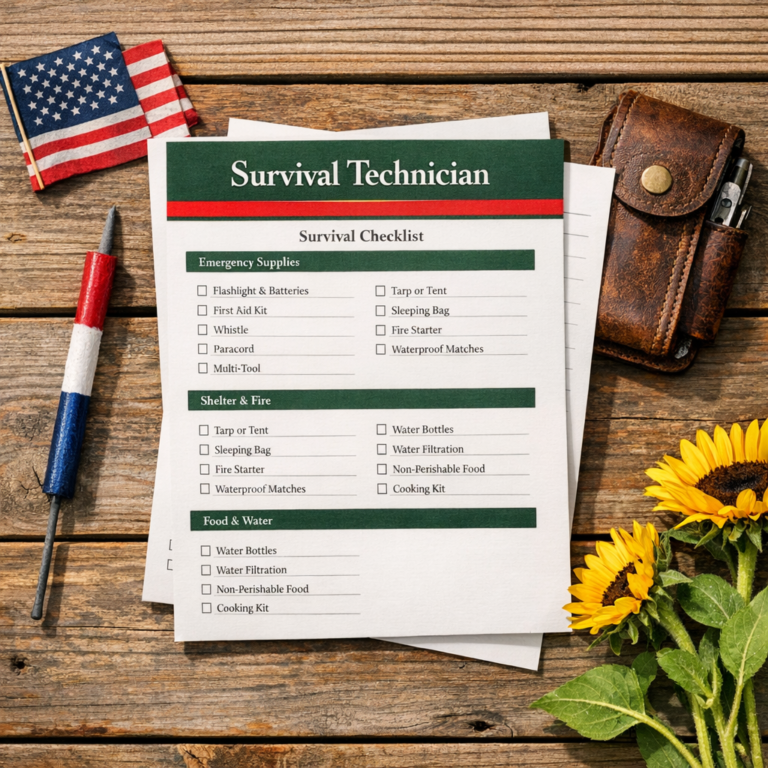
Get the free Bug-Out Bag checklist
Join the list for instant access to printable preparedness downloads.