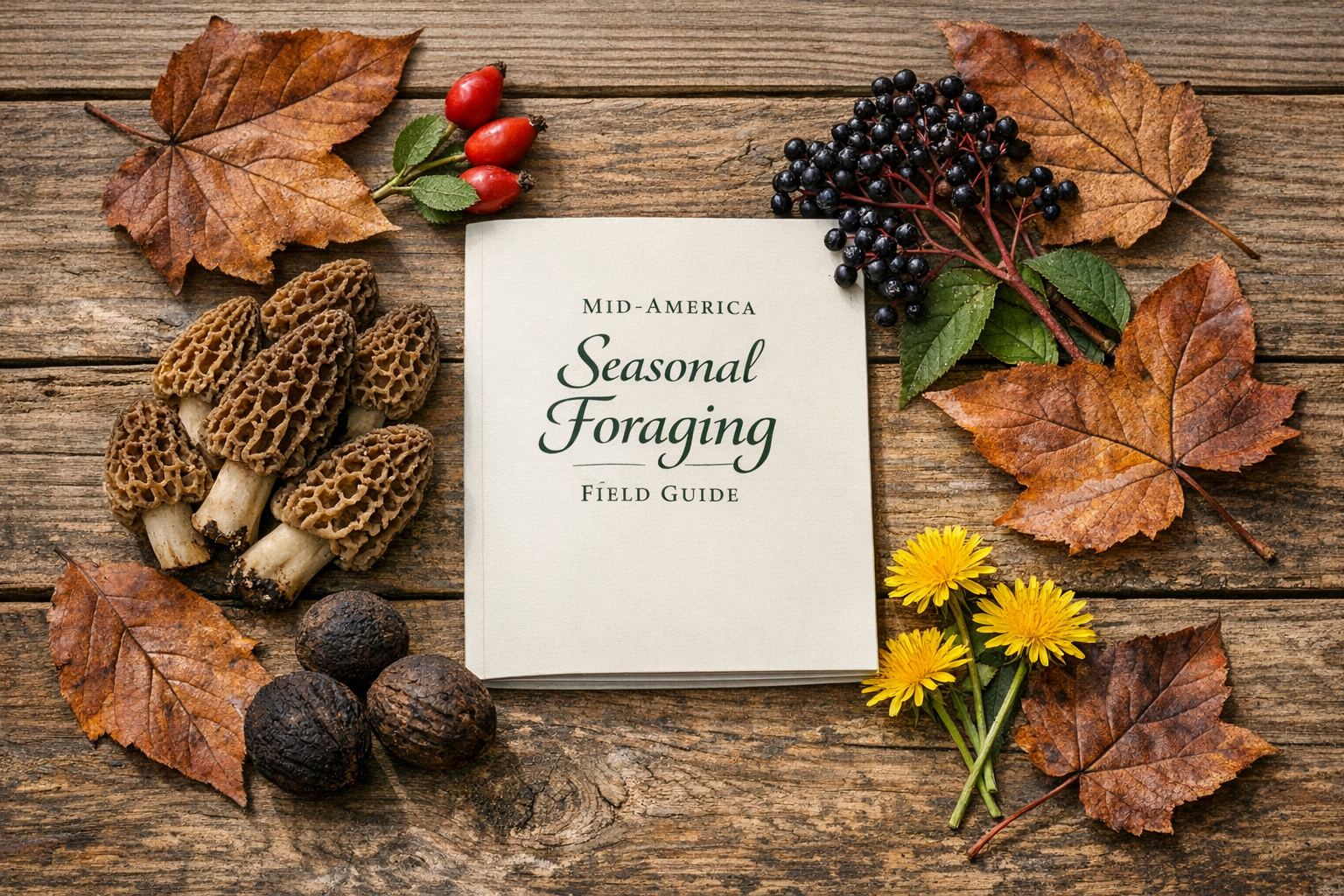
MID-AMERICA Seasonal Foraging Field Guide
$17.00
Know what’s growing in your backyard, your woodlot, and your creek bottom — and what to do with it. This illustrated, four-season field guide covers 24 edible wild plants and mushrooms across the Ozarks, Missouri, Arkansas, Kansas, and Oklahoma. Spring through winter. Identification, look-alike warnings, preparation, preservation, and recipes. Instant PDF download.
Description
Most people walk past a free food supply every single day and never know it.
The Ozarks and Mid-America region is one of the most productive foraging zones in the country — morel mushrooms in April, elderberries in August, black walnuts in October, rose hips all winter. But if you don’t know what you’re looking at, it all just looks like weeds and brush.
The Mid-America Seasonal Foraging Field Guide changes that.
This is a practical, illustrated reference built specifically for the Ozarks, Missouri, Arkansas, Kansas, and Oklahoma — not a generic guide recycled from a Pacific Northwest template. Every plant in this guide grows in your region, in your season, in the habitats you’re already walking through.
What’s Inside
24 edible wild plants and mushrooms covered across all four seasons, each with:
- Timing — exactly when to look, down to the weather conditions
- Habitat — where in your landscape to find it
- Edible Parts — what to harvest and what to leave alone
- Identification — the specific field marks that confirm what you’re looking at
- Look-Alike Warnings — the dangerous species that could fool you, and how to tell them apart
- Uses & Preparation — how to cook, preserve, and store what you find
- Recipe Tips — practical Ozark-tested recipes for each plant
Plus a full Seasonal Harvest Chart so you know what to go looking for in any given month, and a Preservation Methods reference covering dehydrating, canning, fermenting, cold storage, and infused preparations.
Plants Covered
Spring: Morel Mushroom · Wild Garlic & Ramps · Dandelion · Chickweed · Wild Violet · Lamb’s Quarters · Serviceberry
Summer: Elderberry · Blackberry & Dewberry · Pawpaw · Wild Bergamot · Purslane · Wood Sorrel
Fall: Wild Persimmon · Black Walnut · Hickory Nut · Rose Hips · Sumac · Hawthorn Berry · Hen of the Woods
Winter: Jerusalem Artichoke · Cattail · Pine Needle Tea · Witch Hazel
Why This Guide Is Different
Most foraging guides are written for everywhere, which means they’re really written for nowhere in particular. This one is built for the Mid-America zone — the Ozark Plateau, the Cross Timbers, the Missouri River bottomlands, the Kansas Flint Hills. The plants, the timing, the habitats, and the look-alike warnings all reflect what’s actually growing in this region, not what grows in Vermont or Oregon.
The look-alike warnings are sourced from Missouri Department of Conservation guidance. They’re not included to scare you — they’re included because knowing the difference between true morel and false morel, or between elderberry and pokeweed, is the difference between a good meal and an emergency room visit.
What You Get
- Illustrated PDF guide (printer-friendly, field-ready)
- 24 plant profiles with photographs
- Seasonal harvest reference chart
- Preservation methods at a glance
- Recommended field guides and regional resources
- Instant download — available immediately after purchase
This guide is part of the Foundations of Personal Preparedness program at Survival Technician. If you’re serious about building real preparedness skills — not just stockpiling gear — this is where that skillset starts.
⚠ Safety Note: This guide is an educational reference. Always make a positive identification before consuming any wild plant or mushroom. When in doubt, leave it out.



Reviews
There are no reviews yet.