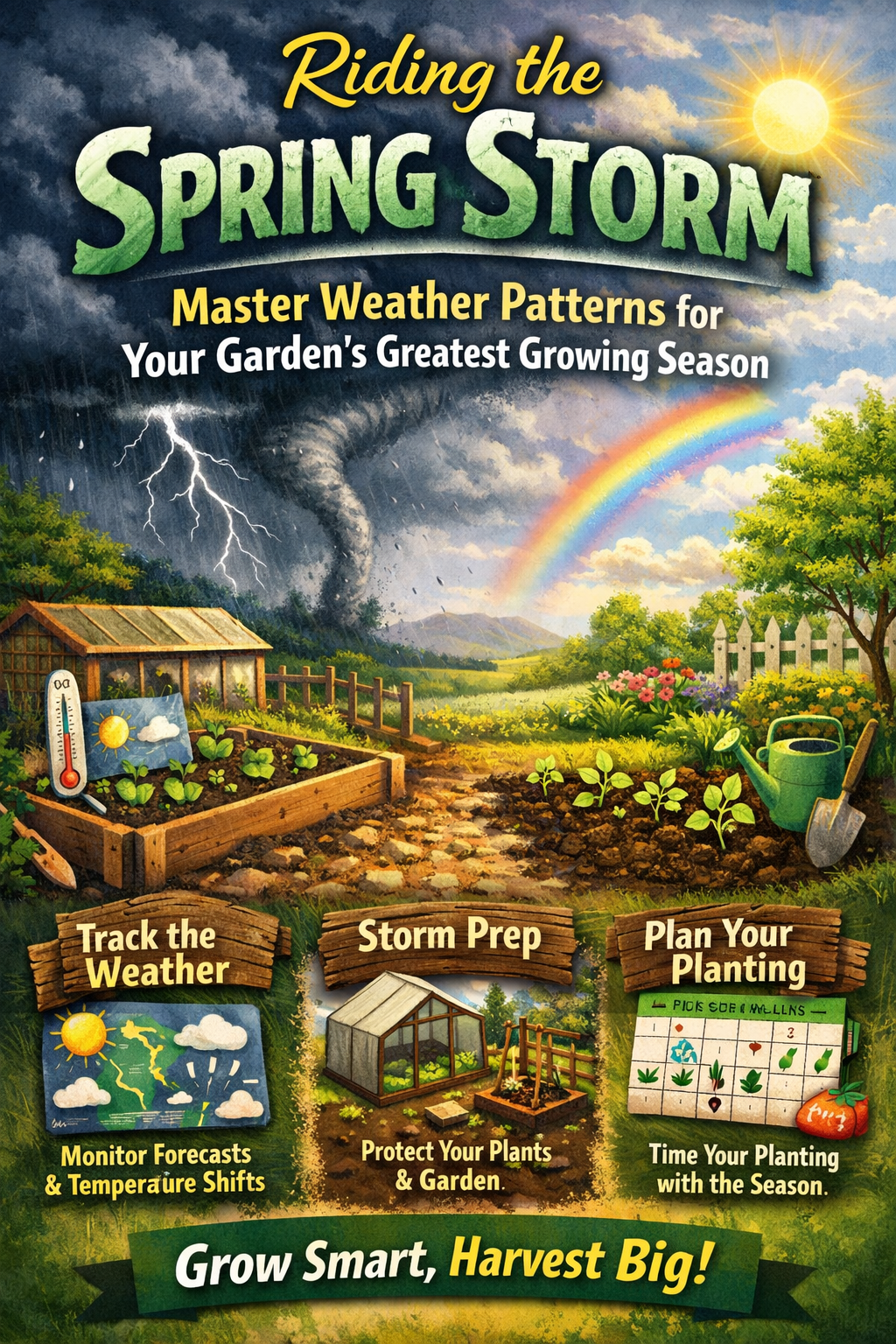
Riding the Spring Storm:
Riding the Spring Storm: Master Weather Patterns for Your Garden’s Greatest Growing Season
Spring arrives with promises of renewal and growth, yet it also brings unpredictable weather that can challenge even experienced gardeners. To achieve a thriving garden and maximize your harvest box turnout, you must understand the importance of prepping your outdoor space by monitoring the ever-changing spring climate. This comprehensive guide walks you through the essential steps for tracking weather patterns, planning your planting schedule, and ultimately creating the perfect conditions for your garden to flourish.
Understanding Spring’s Volatile Weather Patterns: The Key to Successful Prepping
Spring weather demands careful observation and preparation before you commit to any planting decisions. First and foremost, you should invest time in tracking local weather forecasts, paying special attention to temperature fluctuations that occur during this unpredictable season. Furthermore, understanding your region’s specific spring weather patterns enables you to anticipate potential challenges and adjust your gardening plans accordingly.
Additionally, severe thunderstorms and tornadoes represent the most dramatic threats during spring months across many regions. These powerful weather events can destroy seedlings, damage garden structures, and wash away precious topsoil. Therefore, prepping your garden space includes reinforcing supports for delicate plants and creating windbreaks that protect your emerging vegetable seedlings. Moreover, you should establish a safe shelter plan for your garden tools and prepare emergency protocols for your outdoor growing beds.
Monitoring Rain Schedules: Transform Water Patterns Into Planting Success
Tracking rainfall patterns plays a crucial role in determining the optimal timing for your planting endeavors this spring. By monitoring local precipitation forecasts, you gain valuable insights into when natural moisture will supply your garden, reducing the need for supplemental watering. Consequently, this knowledge allows you to coordinate your planting schedule with anticipated rain events, ensuring seedlings receive consistent moisture during their vulnerable establishment phase.
Additionally, maintaining detailed rain records helps you make informed decisions about soil preparation and irrigation infrastructure. As you observe the precipitation trends throughout early spring, you’ll notice patterns that inform whether you need to install additional drainage systems or amend your soil with moisture-retaining organic matter. Furthermore, understanding these water dynamics directly impacts your garden’s productivity and your box turnout at harvest time. By aligning your planting with natural rainfall cycles, you create an efficient, sustainable gardening system that maximizes crop yields while minimizing water waste.
Strategic Planting Timing: The Weather-Based Approach to Garden Glory
Finally, successful spring gardening requires synchronizing your planting schedule with comprehensive weather data you’ve gathered throughout your prepping phase. Therefore, resist the temptation to plant too early, as unexpected late frosts or severe storms can devastate young seedlings before they establish strong root systems. Instead, patience combined with careful weather monitoring creates the ideal foundation for robust plant growth.
In conclusion, prepping your garden for spring success involves much more than simply turning soil and scattering seeds. By actively monitoring weather changes, tracking rainfall patterns, and timing your planting strategically around spring’s dramatic climate shifts, you position yourself for exceptional garden performance and impressive box turnout. Embrace the challenge of spring’s volatility, and your garden will reward you with abundant, healthy produce throughout the growing season.